
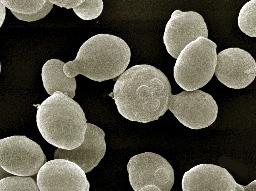
P. stipitis Pignal (1967) is a predominantly haploid, heterothallic yeast related to Candida shehatae and other pentose metabolizing ascomycetous yeast species.1, 2 It has the highest native capacity for xylose fermentation of any known microbe. Strains of P. stipitis are among the best xylose-fermenting yeasts in type culture collections. 4 Fed batch cultures of P. stipitis produce up to 47 g/L of ethanol from xylose at 30°C under low aeration conditions. 5 P. stipitis belongs to a group of yeasts that uses an alternative nuclear genetic code in which CUG codes for serine rather than leucine.
Pichia stipitis is of fundamental biological interest and important to the national interest because of its unique ability to ferment xylose rapidly. Increasing the capacity of P. stipitis for rapid xylose fermentation could enhance the productivity and sustainability of agriculture and forestry by providing new outlets for agricultural and wood harvest residues. Agricultural productivity would be greatly improved and incomes for farmers would increase if there were larger markets for agricultural residues.
P. stipitis CBS 6054 is unusual in that it is the best of only a few yeasts known to ferment xylose to ethanol in high yield. It is related to several yeasts that are found as endosymbionts of beetles that inhabit and degrade white-rotted wood. Unlike Saccharomyces cerevisiae, which regulates fermentation by sensing the presence of fermentable sugars such as glucose, Pichia stipitis induces fermentative activity in response to oxygen limitation.
References:
- Kurtzman, C. P. 1990. Candida shehatae --genetic diversity and phylogenetic relationships with other xylose-fermenting yeasts. Antonie Van Leeuwenhoek 57: 215-22.
- Vaughan Martini, A. E. 1984. Comparazione dei genomi del lievito Pichia stipitis e de alcune specie imperfette affini. Ann. Fac. Agr. Univ. Perugia 38B: 331-335.
- du Preez, J. C., M. Bosch, and B. A. Prior. 1986. Xylose fermentation by Candida shehatae and Pichia stipitis - Effects of pH, temperature and substrate concentration. Enzyme Microb Technol 8: 360-364.
- van Dijken, J. P., E. van den Bosch, J. J. Hermans, L. R. de Miranda, and W. A. Scheffers. 1986. Alcoholic fermentation by 'non-fermentative' yeasts. Yeast 2: 123-127.
- du Preez, J. C., B. van Driessel, and B. A. Prior. 1989. Ethanol tolerance of Pichia stipitis and Candida shehatae strains in fed-batch cultures at controlled low dissolved-oxygen levels. Appl Microbiol Biotechnol 30: 53-58.
Genome Reference(s)
Jeffries TW, Grigoriev IV, Grimwood J, Laplaza JM, Aerts A, Salamov A, Schmutz J, Lindquist E, Dehal P, Shapiro H, Jin YS, Passoth V, Richardson PM
Genome sequence of the lignocellulose-bioconverting and xylose-fermenting yeast Pichia stipitis.
Nat Biotechnol. 2007 Mar;25(3):319-26. doi: 10.1038/nbt1290
